Vitamins and Nutritional Supplements: What Consumers Should Know
Good health begins with informed everyday choices. A balanced diet, regular physical activity, adequate sleep and preventive healthcare all contribute to overall well-being. Yet, modern lifestyles and changing dietary habits can sometimes make it difficult for people to meet all their nutritional requirements.
This is one reason why vitamins and nutritional supplements have become an important part of consumer health discussions.
From multivitamins and vitamin D to calcium, iron and other nutritional formulations, consumers have access to a wide range of supplement products. But choosing the right supplement requires more than recognising a familiar ingredient or following a popular recommendation.
Understanding what supplements do, when they may be useful and how to use them responsibly is essential.
For pharmaceutical and healthcare companies such as Marxx Pharma Pvt. Ltd., responsible product information and consumer awareness are important parts of building trust in the healthcare ecosystem.
What Are Vitamins and Nutritional Supplements?
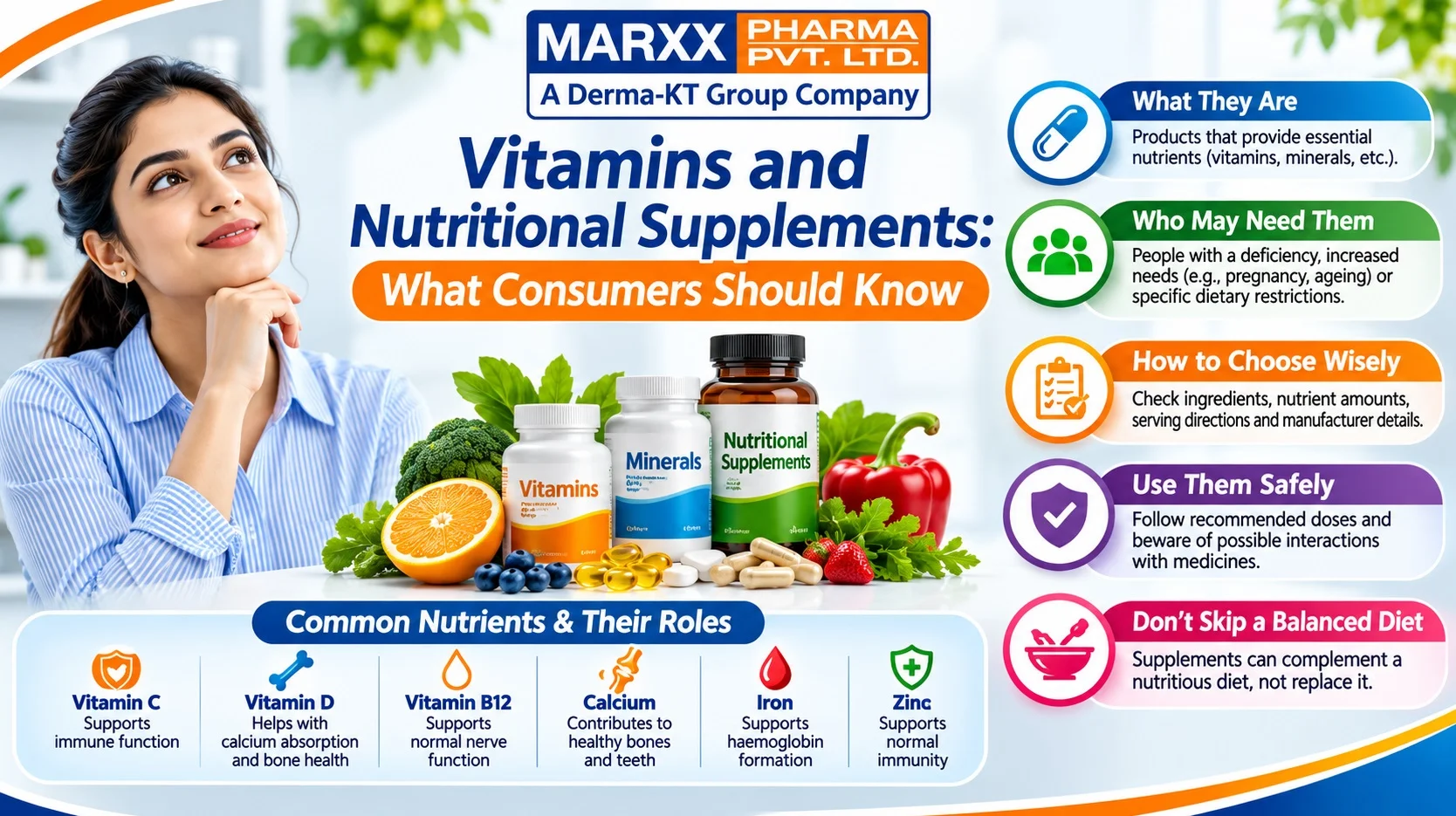
Vitamins and nutritional supplements are products intended to provide nutrients that may be missing or insufficient in a person's regular diet.
They may contain vitamins, minerals, amino acids, fatty acids, herbal ingredients or combinations of different nutrients.
Their formulations and intended uses vary depending on the product.
Common examples include:
- Vitamin D: Supports normal calcium absorption and bone health.
- Vitamin B12: Helps maintain normal nerve function and red blood cell formation.
- Vitamin C: Supports normal immune function and collagen formation.
- Vitamin E: Acts as an antioxidant in the body.
- Calcium: Supports the maintenance of healthy bones and teeth.
- Iron: Contributes to normal haemoglobin formation and oxygen transport.
- Zinc: Supports normal immune function and several biological processes.
These nutrients perform different functions. A supplement containing one nutrient should not automatically be considered a replacement for a balanced nutritional routine.
Why Do People Take Nutritional Supplements?
People consider supplements for different reasons. Their nutritional needs can vary according to age, dietary habits, health conditions and lifestyle.
1. To Address Nutritional Deficiencies
Some individuals may not obtain sufficient amounts of particular nutrients through their regular diet.
A healthcare professional may recommend supplementation when a deficiency is identified or when a person has an increased nutritional requirement.
2. To Support Specific Life Stages
Nutritional requirements can change during pregnancy, childhood, adolescence, ageing and other stages of life.
For example, certain nutrients require particular attention during pregnancy and early development. Supplement choices during these stages should be guided by qualified healthcare professionals.
3. To Complement Dietary Restrictions
People following vegetarian, vegan or other restricted diets may need to pay attention to nutrients that are less readily available in their usual food choices.
Vitamin B12 is one example that may require particular attention in strictly plant-based diets.
4. To Support Nutritional Needs During Certain Health Conditions
Some medical conditions can affect nutrient absorption, metabolism or dietary intake.
In such situations, a healthcare professional may recommend specific supplements based on individual requirements.
5. To Meet Increased Nutritional Requirements
Certain individuals may have increased nutritional needs because of their age, lifestyle or health circumstances.
However, increased requirements should be assessed rather than assumed. Taking multiple supplements without understanding their contents can create unnecessary risks.
Do Everyone Need Vitamin Supplements?
No. Not everyone needs vitamin or nutritional supplements.
People who follow a varied and balanced diet may obtain many essential nutrients through food.
However, individual requirements differ. A person with a diagnosed deficiency, restricted diet, absorption problem or particular medical need may benefit from a suitable supplement.
The decision should be based on nutritional needs, medical history and professional advice rather than trends or general recommendations.
An important distinction: Supplements can help address specific nutritional gaps, but they do not replace a healthy diet or act as universal solutions for preventing or treating diseases.
How to Choose the Right Nutritional Supplement
The wide availability of supplements can make product selection confusing. A few practical checks can help consumers make more informed decisions.
1. Understand Your Nutritional Needs
Start by identifying why you are considering a supplement.
Are you addressing a diagnosed deficiency, following a restricted diet or meeting a requirement identified by a healthcare professional?
Understanding the reason helps avoid unnecessary purchases and inappropriate combinations.
2. Read the Ingredient List
Always review the ingredients and their quantities.
Check which vitamins, minerals or other substances are included. Pay attention to the amount of each nutrient per serving rather than relying only on the product name.
3. Check the Recommended Serving
The recommended serving size and directions should be clearly understood.
Taking more than the recommended amount does not necessarily provide additional benefits and may increase the risk of adverse effects.
4. Review Quality and Regulatory Information
Consumers should check the manufacturer's details, applicable regulatory or licence information, batch details, expiry date and storage instructions.
Purchase products from reliable sources and avoid supplements with unclear labelling or unsupported claims.
5. Consider Possible Interactions
Some supplements can interact with prescription medicines or other supplements.
For example, certain minerals can affect the absorption of some medicines, while high doses of particular vitamins may create health risks.
Discuss supplement use with a healthcare professional if you take regular medication or have an existing medical condition.
6. Avoid Unrealistic Health Claims
Be cautious of products promising instant energy, guaranteed immunity, rapid weight transformation or prevention of multiple diseases.
Responsible supplement communication should explain intended nutritional support without promising results that are not supported by evidence.
Can Taking Too Many Vitamins Be Harmful?
Yes. Excessive intake of certain vitamins and minerals can cause adverse effects.
Some vitamins, including vitamins A, D, E and K, are fat-soluble and can accumulate in the body. Excessive intake may lead to toxicity.
High intake of certain minerals can also cause problems. For example, excessive iron can be harmful, while high zinc intake may interfere with copper absorption.
Potential concerns include:
- Nausea and digestive discomfort.
- Interactions with medicines.
- Excessive intake of specific nutrients.
- Nutrient imbalances.
- Toxicity from high doses of certain vitamins or minerals.
Combining multiple supplements can also result in unintentional duplication of ingredients.
Consumers should check the total intake from all supplements and fortified products rather than considering each product separately.
Supplements and a Balanced Diet: Why Both Matter
Nutritional supplements are intended to complement dietary intake, not replace the variety of nutrients available through food.
A balanced diet provides a combination of vitamins, minerals, protein, fibre, healthy fats and other beneficial food components.
Everyday dietary choices can include:
- Seasonal fruits and vegetables.
- Whole grains and pulses.
- Milk and other suitable dairy products.
- Nuts and seeds.
- Protein-rich foods.
- Adequate water.
The right dietary pattern depends on individual nutritional needs, preferences and health conditions.
Supplements may have a role when specific requirements are not being met, but a healthy eating pattern remains an important foundation of overall nutrition.
Common Myths About Vitamins and Nutritional Supplements
Misunderstandings about supplements can influence consumer decisions. Understanding the facts helps people make safer choices.
Myth 1: Everyone Needs a Daily Multivitamin
Fact: Not everyone requires a multivitamin. Supplementation should depend on individual nutritional needs and professional guidance.
Myth 2: Natural Supplements Are Always Safe
Fact: Natural or herbal ingredients can still cause side effects, allergies or interactions with medicines.
Myth 3: Taking More Vitamins Gives Better Results
Fact: Excessive intake of certain nutrients can be harmful. Recommended amounts should be followed.
Myth 4: Supplements Can Replace Healthy Food
Fact: Supplements do not provide the full range of nutrients and dietary components found in a varied diet.
Myth 5: All Supplements Have the Same Quality
Fact: Formulations, manufacturing practices, ingredient quantities and quality controls can differ between products and manufacturers.
The Importance of Responsible Supplement Manufacturing and Communication
Consumer trust in the nutritional supplement industry depends on more than product availability.
Clear information, responsible manufacturing practices and transparent communication all contribute to informed purchasing decisions.
Healthcare and pharmaceutical companies have an important role in helping consumers understand product information.
Key priorities include:
Accurate Product Information: Product descriptions should reflect the actual formulation and intended use.
Quality Management: Appropriate manufacturing and quality-control practices help maintain consistency.
Transparent Labelling: Ingredient details, quantities, usage directions and warnings should be communicated clearly.
Responsible Marketing: Health-related claims should be supported by suitable evidence and comply with applicable regulations.
Consumer Awareness: Educational content should help people understand both the potential role and limitations of nutritional supplements.
These principles support a more informed and responsible healthcare environment.
Marxx Pharma Pvt. Ltd. and Consumer Awareness
Marxx Pharma Pvt. Ltd. is an Indian pharmaceutical and healthcare company based in Hisar, Haryana.
The company's portfolio includes pharmaceutical products and multiple healthcare-related categories, including vitamins, supplements, personal care and other product segments.
In a market where consumers encounter a growing variety of nutritional products, clear product information and responsible communication are important.
Understanding ingredients, intended uses, quality information and appropriate precautions helps consumers make more informed choices.
Frequently Asked Questions (FAQs)
1. What are vitamins and nutritional supplements?
Vitamins and nutritional supplements are products that provide nutrients such as vitamins, minerals, amino acids or other dietary ingredients. They are generally used to complement dietary intake or address specific nutritional requirements.
2. Do healthy people need nutritional supplements?
Not necessarily. People with a varied and balanced diet may obtain many essential nutrients from food. Supplementation may be appropriate when a specific nutritional need or deficiency is identified.
3. Which vitamins are commonly found in nutritional supplements?
Common examples include vitamins A, B-complex, C, D and E. Products may also contain minerals such as calcium, iron, zinc and magnesium.
4. Can nutritional supplements replace a balanced diet?
No. Supplements do not replace the variety of nutrients, fibre and other beneficial components provided by a balanced diet.
5. Is it safe to take multiple vitamin supplements together?
Not always. Different products may contain overlapping ingredients, potentially resulting in excessive intake. Consumers should review the labels and seek professional advice before combining supplements.
6. Can vitamins interact with medicines?
Yes. Certain vitamins and minerals can affect how medicines are absorbed or work in the body. People taking prescription medicines should discuss supplement use with their healthcare professional.
7. How can consumers identify a reliable supplement?
Check the ingredient list, nutrient quantities, manufacturer information, applicable licence details, batch number, expiry date, storage instructions and warnings. Buy from reliable sources.
8. Are herbal nutritional supplements always safe?
No. Herbal ingredients can cause side effects, allergic reactions or interactions with medicines. Their suitability depends on the formulation and the individual consumer.
9. When should someone consider taking vitamin supplements?
Supplementation may be appropriate when a deficiency is identified, dietary intake is inadequate or a healthcare professional recommends it for a specific need.
10. Why is professional advice important before taking supplements?
A healthcare professional can consider a person's age, diet, medical history, medicines and nutritional requirements before recommending a suitable product or dosage.
Making Informed Nutrition Choices
Vitamins and nutritional supplements can play a useful role in addressing specific nutritional needs. However, their value depends on choosing suitable products, understanding their ingredients and using them responsibly.
Consumers should look beyond attractive packaging and marketing promises. Reading labels, checking product information, maintaining a balanced diet and seeking professional advice are practical steps towards better nutritional decisions.
For the healthcare industry, responsible communication and transparent product information remain essential to building consumer confidence.
A better-informed consumer is better equipped to make thoughtful decisions about everyday nutrition and well-being.