The Future of Healthcare in India: Quality, Access and Innovation
Healthcare is one of the most important foundations of a nation's social and economic development. As India continues to grow, the expectations of its healthcare system are changing. People want better medical facilities, affordable treatment options, reliable medicines and easier access to healthcare professionals.
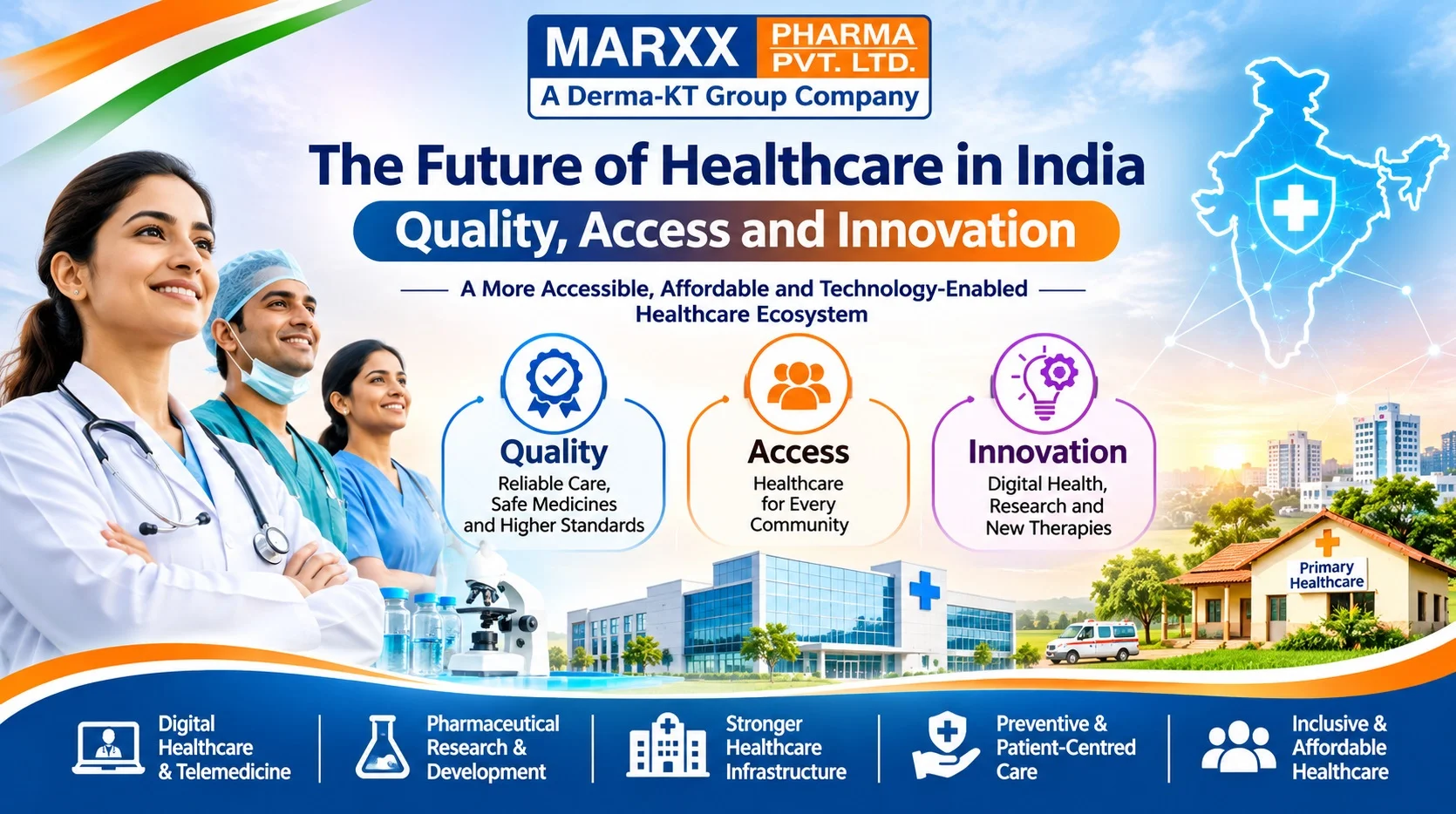
The future of healthcare in India will depend on how effectively the country brings together three essential priorities: quality, access and innovation.
From expanding primary healthcare services to adopting digital health technologies, India is moving towards a more connected and technology-enabled healthcare ecosystem. However, sustainable progress will require more than new infrastructure. It will also depend on skilled professionals, responsible pharmaceutical practices, stronger supply chains and patient-focused services.
For pharmaceutical companies such as Marxx Pharma Pvt. Ltd., these developments represent an evolving healthcare environment in which quality, transparency and responsible business practices remain important.
1. Quality Healthcare Will Become a Greater Priority
Access to healthcare is important, but access alone is not enough. Patients also need services that are safe, reliable, consistent and appropriate to their medical requirements.
Quality healthcare involves several interconnected factors:
- Qualified and trained healthcare professionals.
- Reliable diagnostic and treatment facilities.
- Appropriate medicines and medical products.
- Effective infection prevention and patient safety practices.
- Transparent healthcare processes.
- Continuous quality monitoring.
Healthcare institutions and pharmaceutical organisations both have a role in maintaining quality standards.
For pharmaceutical companies, quality management involves responsible sourcing, controlled manufacturing processes, documentation, appropriate storage and distribution, and compliance with applicable regulatory requirements.
As healthcare awareness increases, patients and professional stakeholders will place greater importance on product information, safety and organisational accountability.
2. Making Healthcare More Accessible Across India
One of India's biggest healthcare priorities is reducing the gap between urban and rural medical services.
Major hospitals and specialist facilities are often concentrated in urban areas, while people in remote locations may face difficulties related to distance, transport, availability of doctors and treatment affordability.
Strengthening primary healthcare can help address these challenges.
India's Ayushman Bharat initiative, including Ayushman Arogya Mandirs and the Pradhan Mantri Jan Arogya Yojana, represents an important effort to expand healthcare access.
Ayushman Arogya Mandirs focus on bringing a wider range of primary healthcare services closer to communities. PM-JAY supports eligible beneficiaries through hospitalisation coverage.
The future opportunity lies in ensuring that these services are supported by adequate staff, medicines, diagnostics, referral systems and effective implementation.
Healthcare access should not depend entirely on where a person lives.
3. Digital Healthcare Will Transform Patient Experiences
Technology is changing how people access medical information, consult doctors and manage their health records.
Digital healthcare can make services more convenient by connecting patients, healthcare professionals, hospitals and diagnostic providers.
Some important developments include:
Telemedicine
Telemedicine allows patients to consult healthcare professionals remotely through digital platforms.
It can be particularly useful for people living in remote areas, patients requiring follow-up consultations and individuals who face difficulties travelling to healthcare facilities.
India's eSanjeevani platform demonstrates how telemedicine can support wider access to medical consultations.
Digital Health Records
Digital health records can help make patient information more accessible across participating healthcare systems.
The Ayushman Bharat Digital Mission aims to develop an interoperable digital health ecosystem that connects patients, healthcare providers and health facilities.
With appropriate consent, privacy safeguards and data security, digital records can support continuity of care and reduce the difficulties associated with fragmented medical information.
Online Healthcare Services
Digital appointment systems, electronic prescriptions, online health information and connected diagnostic services can improve convenience for patients.
However, digital healthcare must remain accessible to people with different levels of digital literacy and internet connectivity.
4. Artificial Intelligence Will Create New Healthcare Opportunities
Artificial Intelligence is becoming an important area of healthcare innovation.
AI-based systems can support healthcare professionals in analysing medical information, identifying patterns and improving certain administrative and clinical workflows.
Potential applications include:
- Supporting medical image analysis.
- Assisting with early screening.
- Identifying patterns in health data.
- Supporting hospital resource planning.
- Improving disease surveillance.
- Helping streamline administrative processes.
AI should be viewed as a supporting technology rather than a replacement for qualified healthcare professionals.
Clinical decisions require professional judgement, appropriate evidence and patient-specific assessment. AI systems must also be evaluated for accuracy, reliability, privacy and potential bias.
The future of AI in Indian healthcare will depend on responsible adoption, suitable infrastructure and strong regulatory oversight.
5. Pharmaceutical Innovation Will Shape the Future of Healthcare
Pharmaceutical innovation is essential to improving the availability of medicines and responding to changing healthcare needs.
India has an important position in the global pharmaceutical industry, particularly in generic medicines and vaccine manufacturing.
The next phase of growth will require continued investment in research, development, advanced manufacturing and quality systems.
Important areas of opportunity include:
Research and Development
Research can help identify new treatment approaches, improve existing formulations and address unmet medical needs.
Biopharmaceuticals
Biologics and biosimilars represent important areas of pharmaceutical development. Strengthening research and manufacturing capabilities can help expand India's role in these specialised healthcare segments.
Generic Medicines
High-quality generic medicines can support affordability and wider treatment access when developed and supplied in accordance with applicable standards.
Advanced Manufacturing
Modern manufacturing systems, process controls, quality assurance and skilled technical teams can strengthen the pharmaceutical supply chain.
Innovation should always be supported by scientific evidence, regulatory compliance and patient safety.
6. Affordable Healthcare Will Remain a National Priority
Healthcare expenses can create financial pressure for individuals and families, particularly when treatment requires hospitalisation, long-term medication or specialised care.
Affordability therefore remains a central part of India's healthcare development.
Several approaches can contribute to more affordable healthcare:
- Strengthening primary healthcare services.
- Improving access to quality generic medicines.
- Expanding health insurance coverage.
- Supporting preventive healthcare.
- Improving supply chain efficiency.
- Encouraging responsible innovation.
- Reducing avoidable administrative and operational costs.
Affordable healthcare should not mean compromising on quality.
The long-term objective should be to make reliable healthcare products and services accessible while maintaining appropriate safety, quality and regulatory standards.
7. Preventive Healthcare Will Become Increasingly Important
Traditional healthcare systems have often focused heavily on treating illness after symptoms appear. However, prevention and early detection can play an important role in improving public health.
India faces a growing burden of non-communicable diseases such as diabetes, hypertension and cardiovascular conditions.
Preventive healthcare can include:
- Regular health screenings.
- Awareness about nutrition and physical activity.
- Early identification of risk factors.
- Vaccination programmes.
- Mental health awareness.
- Community-based health education.
Primary healthcare centres and digital health platforms can support preventive services by making health information and screening opportunities more accessible.
A stronger preventive healthcare approach can help people become more actively involved in managing their health.
8. Strong Pharmaceutical Distribution Networks Will Support Healthcare Access
Healthcare products create value only when they reach the people and institutions that need them.
Pharmaceutical distribution networks connect manufacturers with distributors, stockists, pharmacies, hospitals and other healthcare providers.
A reliable supply chain supports:
- Better product availability.
- Efficient order coordination.
- Appropriate storage and handling.
- Improved inventory management.
- Timely distribution.
- Greater supply chain visibility.
Technology can strengthen these processes through inventory systems, demand forecasting and digital coordination.
As healthcare demand expands across India, pharmaceutical companies will need distribution networks that are efficient, responsible and aligned with applicable quality requirements.
9. Skilled Healthcare Professionals Will Remain Central to Progress
Technology, infrastructure and innovation can strengthen healthcare delivery, but qualified professionals remain essential.
Doctors, nurses, pharmacists, laboratory professionals, technicians and community health workers contribute to different stages of patient care.
India's future healthcare development will require continued attention to:
- Medical and nursing education.
- Specialist training.
- Skill development.
- Rural healthcare staffing.
- Continuous professional learning.
- Responsible adoption of new technologies.
Healthcare innovation is most effective when professionals have the training and resources needed to use it appropriately.
10. The Importance of Quality and Responsible Pharmaceutical Companies
Pharmaceutical companies are an important part of India's healthcare ecosystem.
Their responsibilities extend beyond manufacturing and selling products. They also include maintaining quality systems, communicating product information accurately, following regulatory requirements and supporting responsible distribution.
As consumer awareness increases, companies will need to focus on:
Quality Management: Maintaining documented processes and consistent quality practices.
Product Transparency: Providing accurate product information and avoiding unsupported claims.
Regulatory Compliance: Following applicable pharmaceutical and healthcare regulations.
Responsible Distribution: Supporting appropriate storage, handling and supply chain practices.
Professional Collaboration: Building transparent relationships with healthcare professionals and distribution partners.
These principles can help strengthen trust across the pharmaceutical value chain.
Marxx Pharma Pvt. Ltd. and the Evolving Healthcare Landscape
Marxx Pharma Pvt. Ltd. is an Indian pharmaceutical and healthcare company based in Hisar, Haryana.
The company's journey dates back to 2010, and Marxx Pharma Pvt. Ltd. was incorporated on 17 December 2022.
Its official website presents a portfolio of more than 400 products across categories that include allopathic pharmaceuticals, Ayurvedic products, cosmetics and nutraceuticals. The company also identifies itself as ISO 9001:2015 certified.
As India's healthcare sector continues to evolve, pharmaceutical organisations have an important role in supporting quality awareness, responsible product communication and dependable business practices.
For companies operating across multiple healthcare categories, adapting to changing market needs requires attention to product quality, regulatory responsibilities, distribution coordination and professional relationships.
Marxx Pharma's presence across different product categories reflects its participation in India's wider pharmaceutical and healthcare ecosystem.
Visit the official website:
Challenges That India Must Address
Despite progress in healthcare infrastructure and technology, several challenges require continued attention.
Unequal Access to Healthcare
Differences in healthcare infrastructure, professional availability and transport facilities can affect access across regions.
Healthcare Costs
Out-of-pocket expenditure can remain a burden for households, particularly when treatment involves long-term care or specialised services.
Workforce Availability
A sufficient number of trained healthcare professionals is essential for consistent service delivery.
Digital Divide
Internet connectivity, device availability and digital literacy can influence the effectiveness of digital healthcare services.
Quality and Regulatory Compliance
Maintaining consistent standards across a large and diverse healthcare ecosystem requires continuous monitoring, training and effective implementation.
Addressing these challenges will require collaboration between government institutions, healthcare providers, pharmaceutical companies, technology organisations and communities.
Frequently Asked Questions (FAQs)
1. What is the future of healthcare in India?
The future of healthcare in India is expected to be shaped by improved medical infrastructure, affordable treatment, digital health services, pharmaceutical innovation, preventive care and stronger quality management.
2. How is technology changing healthcare in India?
Technology is supporting telemedicine, digital health records, online appointments, AI-assisted analysis and improved healthcare administration. These developments can improve convenience, connectivity and access when implemented responsibly.
3. What role does AI play in the future of healthcare?
AI can support medical image analysis, health data interpretation, disease surveillance and administrative workflows. It should complement qualified healthcare professionals rather than replace clinical judgement.
4. Why is affordable healthcare important for India?
Affordable healthcare helps individuals and families access necessary medical services without facing excessive financial pressure. It also supports broader health equity and public health development.
5. How can pharmaceutical companies contribute to better healthcare access?
Pharmaceutical companies can contribute through quality-focused manufacturing, responsible product communication, reliable distribution networks, regulatory compliance and collaboration with healthcare stakeholders.
6. What is the importance of digital healthcare in rural India?
Digital healthcare can connect people in remote areas with healthcare professionals and services. Telemedicine and digital health platforms can reduce certain travel and access barriers, although local infrastructure and professional support remain essential.
7. Why is pharmaceutical innovation important?
Pharmaceutical innovation supports research, improved formulations, advanced medicines, vaccine development and manufacturing capabilities. It can help address changing healthcare needs when supported by evidence and regulatory oversight.
8. How can India improve healthcare quality?
India can strengthen healthcare quality through professional training, effective quality management, patient safety practices, reliable diagnostics, regulatory oversight and continuous improvement across healthcare facilities.
9. What is the role of preventive healthcare in India's future?
Preventive healthcare focuses on early screening, health awareness, vaccination and lifestyle-related risk reduction. It can help identify health concerns earlier and support better long-term health outcomes.
10. How does Marxx Pharma Pvt. Ltd. participate in the healthcare sector?
Marxx Pharma Pvt. Ltd. operates in the pharmaceutical and healthcare sector with a product portfolio covering pharmaceutical, Ayurvedic, cosmetic and nutraceutical categories. Its official product portfolio provides further information about its range.
Building a More Connected and Patient-Centred Healthcare Ecosystem
The future of healthcare in India will depend on how effectively quality, access and innovation work together.
Digital technology can improve connectivity. Pharmaceutical research can support new treatment options. Strong distribution networks can improve product availability. Quality management can strengthen reliability, while preventive healthcare can encourage healthier communities.
But lasting progress requires collaboration across the entire healthcare ecosystem.
For pharmaceutical companies, healthcare providers, policymakers and technology organisations, the opportunity is clear: contribute to a system that is more accessible, more responsible and more focused on people's needs.