Understanding the Difference Between Medicines, Nutraceuticals and Wellness Products
Today's healthcare market offers consumers more choices than ever before. From prescription medicines and nutritional supplements to personal-care and wellness products, people encounter a wide range of products designed for different health-related needs.
However, these categories are not interchangeable.
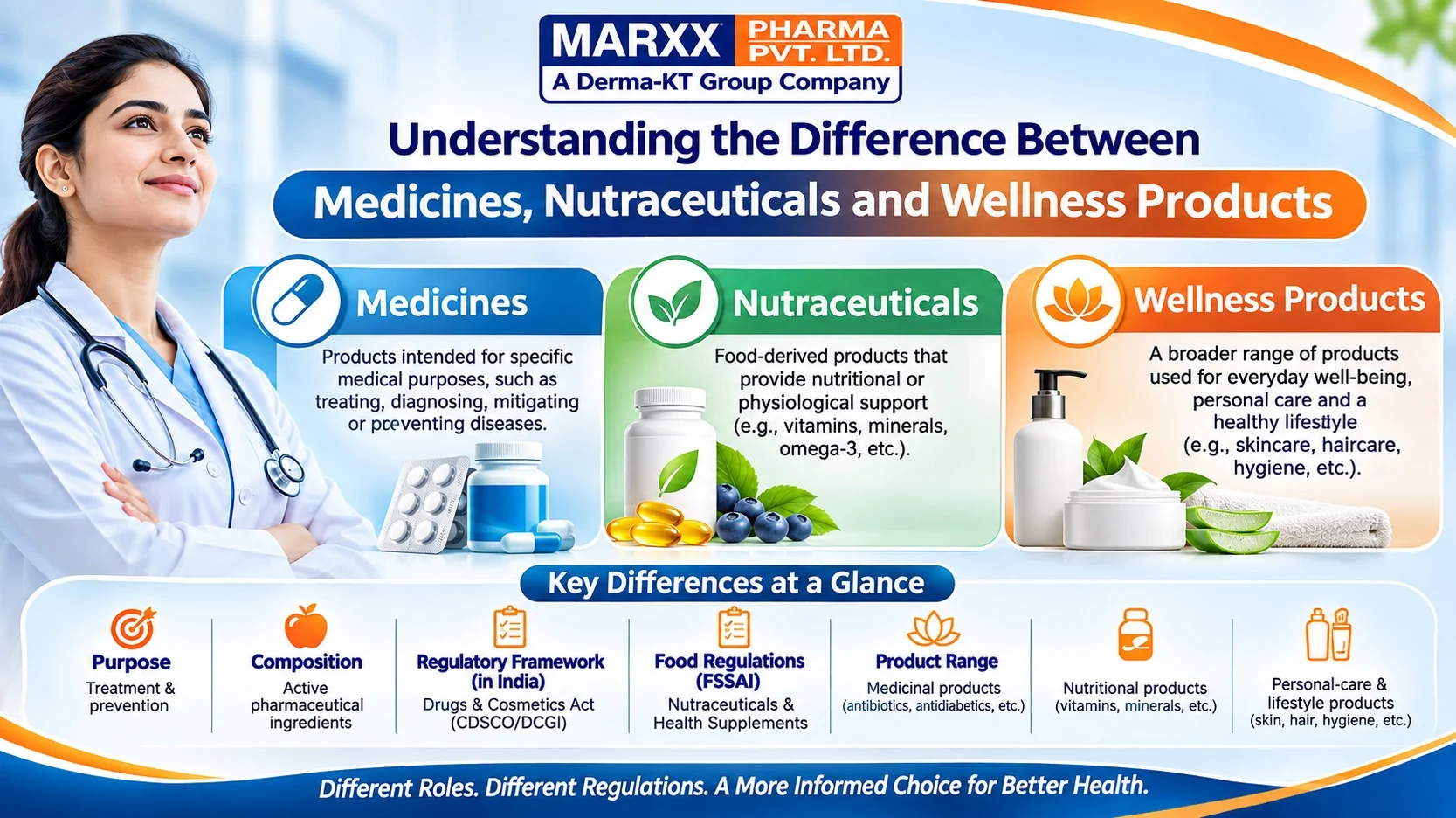
A medicine is intended for a specific medical purpose. A nutraceutical is a food-based product designed to provide nutritional or physiological support. Wellness products, meanwhile, cover a broader range of products associated with everyday health, personal care and general well-being.
Understanding these differences is important for consumers, healthcare professionals, retailers and pharmaceutical businesses.
For companies such as Marxx Pharma Pvt. Ltd., which operates across pharmaceutical, Ayurvedic, cosmetic and nutraceutical categories, clear product classification and responsible communication are important parts of the healthcare ecosystem.
1. What Are Medicines?
Medicines are products intended for medical purposes, such as diagnosing, treating, mitigating or preventing diseases and medical conditions, depending on their approved classification and indications.
They may contain active pharmaceutical ingredients that produce specific pharmacological effects in the body.
Medicines are developed and evaluated through scientific and regulatory processes that consider factors such as quality, safety and efficacy.
Common Examples of Medicines
- Antibiotics used for certain bacterial infections.
- Antihypertensive medicines used to manage high blood pressure.
- Antidiabetic medicines used in diabetes management.
- Antifungal medicines used for fungal infections.
- Pain-relief medicines used for appropriate types of pain.
The correct medicine depends on the patient's condition, medical history and professional assessment.
Key Characteristics of Medicines
Specific Medical Purpose: Medicines are intended for defined medical uses according to their approved indications.
Active Ingredients: They contain pharmacologically active substances designed to produce particular effects.
Regulatory Oversight: In India, drugs are regulated under the Drugs and Cosmetics Act, 1940 and associated rules.
Professional Guidance: Many medicines require a healthcare professional's prescription or supervision, while certain products may be available without a prescription according to their applicable classification.
Safety Information: Product information includes relevant directions, precautions, warnings and possible adverse effects.
Medicines should always be used according to their approved product information and appropriate healthcare guidance.
2. What Are Nutraceuticals?
Nutraceuticals are products that contain food-derived nutrients or other permitted ingredients and are intended to provide nutritional or physiological benefits.
They may be designed to supplement dietary intake or support particular nutritional requirements.
In India, nutraceuticals and related health supplements are covered under the Food Safety and Standards Authority of India's regulations for health supplements, nutraceuticals and other specified food categories.
Unlike medicines, nutraceuticals are not generally intended to diagnose, treat, cure or prevent diseases.
Common Examples of Nutraceuticals
Depending on their formulation and regulatory classification, examples may include:
- Vitamin and mineral supplements.
- Omega-3 fatty acid supplements.
- Certain amino acid formulations.
- Permitted botanical-based nutritional products.
- Other products formulated under applicable nutraceutical standards.
The actual classification depends on the product's ingredients, composition, intended use and applicable regulations.
Key Characteristics of Nutraceuticals
Nutritional Support: They are designed to provide nutrients or other permitted ingredients for nutritional or physiological support.
Food-Based Classification: In India, products marketed as nutraceuticals must comply with the applicable FSSAI framework.
Defined Composition: Their ingredients, permitted levels, labelling and claims must follow relevant regulatory requirements.
Responsible Claims: They should not be promoted as medicines or as guaranteed treatments for diseases.
Supplementary Role: They should complement appropriate dietary practices rather than automatically replace balanced nutrition or prescribed medical treatment.
Nutraceuticals may be useful in particular nutritional contexts, but their suitability depends on individual requirements and professional advice.
3. What Are Wellness Products?
Wellness products are a broad group of products associated with everyday well-being, personal care, lifestyle and general health maintenance.
Unlike medicines and nutraceuticals, the term "wellness products" does not represent one single regulatory classification in India.
Products marketed under this term may belong to different categories, depending on their ingredients, intended use, composition and claims.
Common Examples of Wellness Products
- Personal-care products.
- Skincare and cosmetic products.
- Hair-care products.
- Certain non-medicinal hygiene products.
- General lifestyle and self-care products.
- Products designed for everyday grooming and comfort.
Some wellness products may fall under cosmetic regulations, while others may be classified as foods, health supplements, medicines or medical devices.
Key Characteristics of Wellness Products
Everyday Well-Being: Many are designed to support personal care, hygiene, grooming or lifestyle routines.
Different Product Categories: The term can cover several types of products with different regulatory requirements.
Purpose-Specific Claims: Product claims must remain consistent with the applicable classification and supporting evidence.
Consumer-Focused Use: Many products are intended for routine personal use, subject to their labelling and directions.
It is important to remember that the word "wellness" does not automatically mean a product is suitable for treating a medical condition.
4. Medicines vs Nutraceuticals vs Wellness Products: Key Differences
Understanding the three categories becomes easier when they are compared side by side.
Parameter Medicines Nutraceuticals Wellness Products Primary purpose Medical treatment, prevention or other approved medical uses Nutritional or physiological support General well-being, personal care or lifestyle needs Typical composition Active pharmaceutical ingredients Permitted nutrients and other food ingredients Varies by product category Regulatory framework in India Drugs and Cosmetics Act and applicable rules FSSAI regulations Depends on classification, such as cosmetics, food or other applicable categories Disease treatment claims Only as permitted by approved indications and regulations Not generally intended for disease treatment or cure Depends on product category; unsupported medical claims are not appropriate Professional guidance Often important or necessary Useful depending on individual needs Depends on product type and intended use Examples Antibiotics, antidiabetic medicines, antifungals Vitamin and mineral supplements Skincare, haircare and personal-care products
The most important point is that a product's name or marketing category alone does not determine its legal classification.
Its composition, intended purpose, claims and applicable regulatory requirements must all be considered.
5. Understanding the Regulatory Framework in India
India has different regulatory frameworks for medicines, nutraceuticals and other wellness-related products.
Understanding these frameworks helps companies maintain appropriate product standards and enables consumers to evaluate product information more carefully.
Medicines: Drugs and Cosmetics Regulatory Framework
The Drugs and Cosmetics Act, 1940 and associated rules provide the principal regulatory framework for drugs in India.
The Central Drugs Standard Control Organization (CDSCO), along with state drug control authorities, performs regulatory functions relating to the quality, safety and regulation of drugs.
Relevant requirements may include manufacturing and sale licences, product approvals, labelling, quality standards and other applicable obligations.
Nutraceuticals: FSSAI Regulations
The Food Safety and Standards Authority of India regulates food products, including health supplements and nutraceuticals.
The Food Safety and Standards (Health Supplements, Nutraceuticals, Food for Special Dietary Use, Food for Special Medical Purpose, Functional Food and Novel Food) Regulations, 2016 establish requirements for specified product categories.
These requirements address areas such as permitted ingredients, composition, labelling and claims.
Wellness and Personal-Care Products: Classification Matters
Wellness products do not all follow the same regulatory framework.
For example, products classified as cosmetics are subject to the applicable provisions of the Drugs and Cosmetics Act and Cosmetics Rules, 2020.
Products classified as foods, supplements, medicines or medical devices may have different requirements.
Therefore, businesses should determine the correct regulatory category before manufacturing, marketing or distributing a product.
6. Why Should Consumers Understand These Differences?
Consumers often see medicines, supplements and wellness products displayed together in pharmacies, retail stores and online marketplaces.
Without proper awareness, it can become difficult to understand what each product is intended to do.
Understanding product categories can help consumers make more informed choices.
Avoid Confusing Supplements with Medicines
A nutritional supplement should not automatically be considered a replacement for prescribed treatment.
People managing medical conditions should discuss supplements with their healthcare professionals.
Understand Product Labels
Product labels provide important information about ingredients, directions, warnings, recommended use and manufacturer details.
Reading this information helps consumers understand what they are purchasing.
Identify Appropriate Product Claims
Consumers should be cautious of products promising guaranteed cures, instant results or unrealistic health improvements.
Responsible healthcare decisions should be based on reliable product information and appropriate professional guidance.
Choose Products According to Individual Needs
Not every product is suitable for every person.
Age, medical history, allergies, nutritional requirements and existing medicines may influence product suitability.
7. The Role of Pharmaceutical Companies in Responsible Product Communication
Pharmaceutical companies have an important responsibility to communicate product information accurately.
When a company operates across multiple healthcare categories, it becomes especially important to distinguish medicines, nutraceuticals, cosmetics and other wellness products correctly.
Responsible communication should focus on:
Accurate Product Classification: Every product should be represented according to its applicable regulatory category.
Transparent Composition: Product ingredients and relevant information should be communicated clearly.
Evidence-Based Claims: Marketing statements should be supported by appropriate evidence and permitted under applicable regulations.
Appropriate Usage Guidance: Consumers should understand the intended use and directions for each product.
Quality and Compliance: Businesses should maintain applicable quality systems and regulatory documentation.
These practices help build consumer confidence and support responsible growth across the healthcare industry.
8. How Medicines, Nutraceuticals and Wellness Products Complement the Healthcare Ecosystem
Although these categories serve different purposes, they can exist within a connected healthcare ecosystem.
Medicines support the management of medical conditions through approved therapeutic uses.
Nutraceuticals can contribute to nutritional requirements and physiological support when appropriate.
Wellness and personal-care products can support everyday hygiene, grooming and lifestyle practices.
Together, these categories reflect the different ways people engage with healthcare and well-being.
However, their roles should remain clearly defined. A wellness product should not be presented as a medicine, and a nutraceutical should not be promoted as a guaranteed treatment for disease.
The right product choice depends on its intended purpose, classification and individual requirements.
9. Marxx Pharma Pvt. Ltd.: A Diverse Healthcare Product Portfolio
Marxx Pharma Pvt. Ltd. is an Indian pharmaceutical and healthcare company based in Hisar, Haryana.
The company's journey dates back to 2010, and Marxx Pharma Pvt. Ltd. was incorporated on 17 December 2022.
Its official portfolio includes more than 400 products across different categories, including allopathic pharmaceuticals, Ayurvedic products, cosmetics and nutraceuticals.
This diversity reflects the different product needs addressed within the broader healthcare and personal-care market.
For a company operating across multiple categories, responsible product communication and appropriate classification are essential.
Each product must be understood according to its intended use, formulation, applicable quality requirements and regulatory framework.
The company also provides dedicated information about its business divisions and product categories:
https://marxxpharma.com/divisions/
10. What Should Businesses Consider Before Launching Healthcare Products?
Companies developing or distributing healthcare-related products should evaluate several important factors before introducing them to the market.
Correct Product Classification
Determine whether the product is a medicine, nutraceutical, cosmetic, food or another regulated category.
Regulatory Compliance
Understand the applicable manufacturing, licensing, labelling, advertising and distribution requirements.
Product Quality
Establish suitable quality-control procedures and maintain appropriate documentation.
Clear Product Information
Communicate the product's composition, intended use, directions and relevant precautions.
Responsible Marketing
Avoid exaggerated claims and ensure promotional communication follows the requirements applicable to the product category.
These considerations help create a more transparent and responsible healthcare marketplace.
Frequently Asked Questions (FAQs)
1. What is the main difference between medicines and nutraceuticals?
Medicines are intended for specific medical purposes according to their approved indications. Nutraceuticals are food-based products intended to provide nutritional or physiological support and are not generally intended to treat or cure diseases.
2. Are nutraceuticals the same as dietary supplements?
Not necessarily. Dietary or health supplements and nutraceuticals are related categories within the broader FSSAI framework, but their precise classification depends on their composition, intended use and applicable regulations.
3. Are wellness products considered medicines?
No. Wellness products are a broad commercial term. A product marketed for wellness may be classified as a cosmetic, food, supplement, medicine or another category depending on its intended use and regulatory requirements.
4. Who regulates medicines in India?
Medicines are regulated under the Drugs and Cosmetics Act, 1940 and associated rules. CDSCO and state drug control authorities perform relevant regulatory functions.
5. Who regulates nutraceuticals in India?
The Food Safety and Standards Authority of India regulates nutraceuticals and specified health supplement categories under the applicable FSSAI regulations.
6. Can nutraceuticals replace prescribed medicines?
Nutraceuticals should not automatically replace prescribed medicines. Anyone considering changing or stopping treatment should consult their healthcare professional.
7. Do wellness products always have health benefits?
Not necessarily. The term wellness product covers a wide range of products. Their purpose and permitted claims depend on their specific category, composition and supporting evidence.
8. Why is product classification important in the pharmaceutical industry?
Correct classification helps companies follow applicable regulations, communicate product information accurately and avoid misleading consumers about a product's intended use.
9. Can a pharmaceutical company offer medicines and nutraceuticals together?
Yes. A company may operate across different product categories, provided each product meets the relevant regulatory, quality, manufacturing and marketing requirements.
10. How can consumers choose the right healthcare product?
Consumers should understand the product's intended use, review its label, check relevant ingredients and precautions, and seek professional guidance when necessary.
Making Informed Healthcare Choices
Medicines, nutraceuticals and wellness products all have different roles within the healthcare marketplace.
Understanding these differences helps consumers avoid confusion, recognise product limitations and make more informed decisions.
For pharmaceutical companies, clear classification, quality management and responsible communication are equally important.
As India's healthcare market continues to evolve, the ability to distinguish medical treatment, nutritional support and everyday wellness will remain an essential part of building consumer awareness and trust.