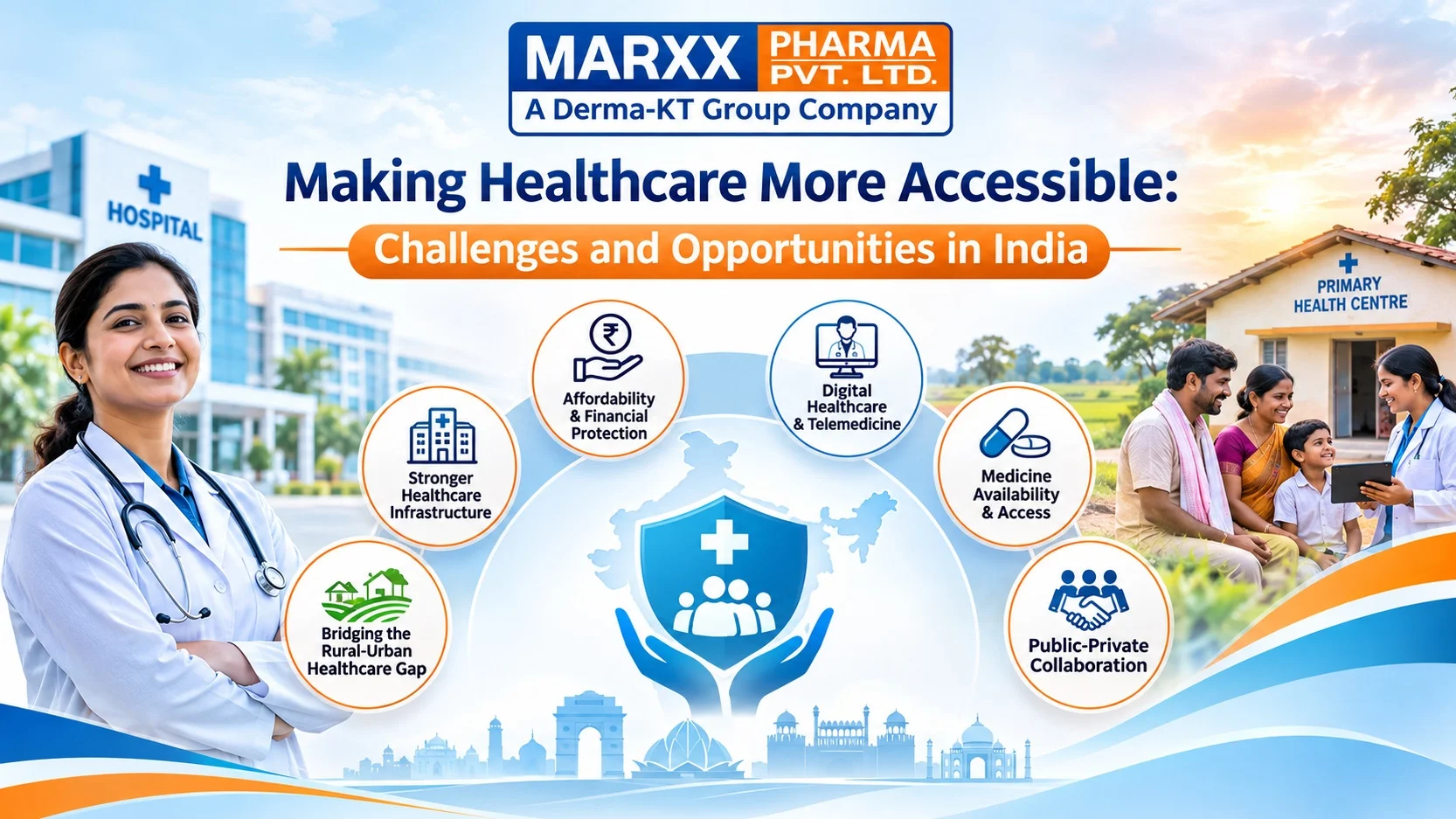
Making Healthcare More Accessible: Challenges and Opportunities in India
Healthcare is one of the most important foundations of a strong and progressive society. Access to timely medical attention, qualified healthcare professionals, essential medicines and reliable health information can influence not only individual well-being but also the development of communities and the economy.
India has made meaningful progress in expanding healthcare infrastructure, strengthening public health programmes, increasing health insurance coverage and introducing digital health services. Yet, access to quality healthcare remains uneven across different regions and population groups.
For many families, the challenge is not simply finding a hospital. It is finding the right treatment at the right time, within a manageable distance and at a cost they can afford.
This makes healthcare accessibility in India an important priority for policymakers, healthcare professionals, pharmaceutical companies, technology providers and the wider healthcare industry.
The opportunity ahead is significant: build a healthcare ecosystem that is more affordable, geographically balanced, digitally connected and focused on people's needs.
Understanding Healthcare Accessibility in India
Healthcare accessibility means that individuals can obtain appropriate healthcare services when and where they need them, without facing unreasonable financial, geographical or social barriers.
It involves more than the presence of hospitals or clinics. Effective healthcare access depends on several connected factors:
- Availability of qualified doctors and healthcare professionals.
- Access to hospitals, clinics and diagnostic facilities.
- Affordable consultation, treatment and medicines.
- Reliable availability of essential medicines.
- Awareness of preventive healthcare.
- Access to health insurance and financial protection.
- Digital health services and medical information.
- Equal opportunities for rural, urban and underserved communities.
A healthcare system becomes more accessible when these elements work together.
For example, establishing a healthcare facility in a rural area is an important step. However, its impact may remain limited if it lacks qualified staff, diagnostic equipment, essential medicines or an effective referral system.
Accessibility must therefore be measured through the actual healthcare experience of people, not infrastructure numbers alone.
India's Progress Towards More Accessible Healthcare
India's healthcare landscape has evolved through public investment, policy initiatives, private-sector participation and technology-led solutions.
Several developments are helping improve access to healthcare services.
1. Expansion of Public Healthcare Infrastructure
Government healthcare facilities play an important role in providing essential medical services, particularly to economically vulnerable communities.
Primary healthcare centres, community health centres, district hospitals and medical colleges form important parts of this network.
The National Health Mission has supported efforts to strengthen public healthcare delivery, improve maternal and child health services, expand primary care and address healthcare workforce requirements.
Ayushman Arogya Mandirs also contribute to the expansion of comprehensive primary healthcare services, including preventive care and screening.
The next priority is to ensure that these facilities have adequate staff, equipment, medicines and operational support.
2. Ayushman Bharat and Financial Protection
Healthcare expenses can place considerable pressure on household finances, especially when families require hospitalisation or specialised treatment.
Ayushman Bharat Pradhan Mantri Jan Arogya Yojana (AB-PMJAY) is an important government initiative designed to improve financial protection for eligible families.
The scheme provides eligible beneficiaries with health assurance for covered secondary and tertiary hospital care through empanelled healthcare facilities.
In July 2026, the Union Health Ministry reported that AB-PMJAY had expanded across all 36 States and Union Territories. The programme's portability feature also helps eligible beneficiaries access covered services beyond their home state.
The expansion of health coverage to senior citizens aged 70 years and above has further widened the programme's reach.
These initiatives demonstrate how financial protection can help reduce barriers to hospital-based healthcare. However, awareness, beneficiary support, hospital participation and effective implementation remain important for translating coverage into actual access.
3. Growth of Digital Healthcare
Technology is changing how people access healthcare information and services.
Digital health platforms can support appointment management, teleconsultations, health records, referrals and communication between patients and healthcare providers.
The Ayushman Bharat Digital Mission (ABDM) is working towards an integrated digital health ecosystem.
According to a Ministry of Health and Family Welfare update published in August 2025, more than 79.9 crore Ayushman Bharat Health Accounts (ABHA) had been created by August 5, 2025.
ABHA supports the creation and sharing of digital health records with the individual's informed consent.
Digital healthcare can be particularly valuable for people living in remote locations, where access to certain specialists may be limited.
However, digital services should complement physical healthcare facilities rather than replace essential in-person medical attention.
Major Challenges Affecting Healthcare Accessibility in India
Despite progress, several structural and operational challenges continue to influence healthcare access.
1. Rural-Urban Healthcare Divide
One of India's major healthcare challenges is the uneven distribution of medical infrastructure and healthcare professionals.
Urban centres generally have greater access to specialised hospitals, diagnostic facilities and advanced medical services. Rural and remote communities may need to travel considerable distances for specialist consultations or advanced treatment.
This can create additional financial and practical difficulties for families.
The Ministry of Health and Family Welfare's Health Dynamics of India report highlights the importance of infrastructure and human-resource availability across states and regions.
The challenge is not limited to building more facilities. Healthcare planning must also focus on staffing, equipment, referral networks and long-term operational sustainability.
What can help?
- Strengthening primary healthcare facilities.
- Improving rural doctor and specialist availability.
- Expanding telemedicine and remote consultations.
- Developing better emergency transport systems.
- Improving diagnostic services at district and community levels.
- Creating incentives for healthcare professionals to serve underserved regions.
2. Affordability and Out-of-Pocket Expenses
The cost of healthcare remains an important concern for many Indian households.
Expenses may include consultations, medicines, diagnostic tests, hospitalisation, transportation and follow-up care.
According to India's National Health Accounts Estimates for 2022–23, household out-of-pocket expenditure accounted for approximately 43.4% of total health expenditure.
This indicates progress in financial protection compared with earlier years, but it also shows that households continue to bear a substantial share of healthcare costs.
Affordability is particularly important for people managing long-term conditions that require regular consultations, medicines and monitoring.
What can help?
- Strengthening public healthcare services.
- Expanding effective health insurance coverage.
- Improving access to affordable essential medicines.
- Promoting generic medicine awareness.
- Supporting transparent healthcare pricing.
- Strengthening preventive healthcare to reduce avoidable complications.
Affordable healthcare should not mean compromising on appropriate quality, safety or professional standards.
3. Shortage and Uneven Distribution of Healthcare Professionals
Healthcare infrastructure depends on trained professionals who can provide appropriate services.
India has expanded medical education and increased the number of registered healthcare professionals. However, workforce availability is not uniform across states, districts and medical specialities.
The Parliamentary Standing Committee's review of health-related infrastructure has highlighted persistent shortages of specialists in rural Community Health Centres.
Such gaps can affect access to services such as obstetrics, paediatrics, general medicine and surgery.
The challenge is therefore both quantitative and geographical: India needs an adequate healthcare workforce as well as a more balanced distribution of professionals.
What can help?
- Increasing training and postgraduate opportunities.
- Improving working conditions in underserved regions.
- Supporting rural healthcare recruitment.
- Strengthening nursing and paramedical education.
- Expanding continuing professional development.
- Using telemedicine to connect local facilities with specialists.
4. Unequal Access to Diagnostic Services
Accurate diagnosis is an essential part of effective healthcare.
However, access to diagnostic services can vary significantly depending on geographical location and financial circumstances.
Advanced imaging, pathology testing and specialised investigations may be more readily available in larger cities than in smaller towns or rural areas.
When patients need to travel for diagnostic services, treatment may be delayed and expenses may increase.
Expanding diagnostic capacity at district hospitals, improving laboratory networks and supporting reliable point-of-care testing can help address this gap.
5. Medicine Availability and Distribution Challenges
Access to appropriate medicines is an important part of healthcare accessibility.
A patient may receive a diagnosis and prescription but still face difficulties if the required medicine is unavailable locally, unaffordable or difficult to obtain consistently.
Medicine accessibility depends on several factors:
- Reliable pharmaceutical supply chains.
- Appropriate distribution networks.
- Inventory planning.
- Regulatory compliance.
- Product quality and documentation.
- Availability of suitable formulations.
- Storage and transportation practices.
Pharmaceutical companies, distributors, stockists, retailers and healthcare institutions all have responsibilities within this system.
Improving coordination across the supply chain can help reduce avoidable disruptions and strengthen access to medicines.
6. Limited Awareness and Preventive Healthcare
Healthcare accessibility is also influenced by how well people understand their health needs.
Limited awareness about preventive check-ups, vaccination, nutrition, hygiene and early symptoms can delay medical attention.
In some communities, people seek professional advice only when symptoms become severe.
Preventive healthcare can help individuals understand potential health risks earlier and make informed decisions.
Community health education, school-based awareness, local health camps and reliable digital information can contribute to better health-seeking behaviour.
Emerging Opportunities to Make Healthcare More Accessible
India's healthcare challenges also represent opportunities for innovation, investment and collaboration.
The next phase of healthcare development can focus on solutions that improve affordability, availability and continuity of care.
1. Strengthening Primary Healthcare
Primary healthcare is often the first point of contact between individuals and the healthcare system.
Strong primary care facilities can support preventive services, early diagnosis, routine treatment and referrals.
Investing in primary healthcare can also help reduce unnecessary pressure on larger hospitals.
Important opportunities include:
- Better-equipped primary healthcare centres.
- Regular availability of essential medicines.
- Preventive screening programmes.
- Maternal and child healthcare services.
- Chronic disease monitoring.
- Community-level health education.
A stronger primary healthcare network can make healthcare more convenient and accessible for local communities.
2. Expanding Telemedicine and Digital Health Services
Digital healthcare can help connect patients with medical professionals beyond geographical boundaries.
Telemedicine is particularly useful for follow-up consultations, selected specialist interactions and healthcare guidance where physical examination is not immediately necessary.
Digital platforms can also support:
- Online appointment scheduling.
- Electronic health records.
- Remote patient monitoring.
- Digital prescriptions.
- Diagnostic report access.
- Healthcare reminders.
- Referral coordination.
However, digital inclusion requires affordable internet access, digital literacy, language accessibility and suitable privacy protections.
The future of digital healthcare should be patient-centred, secure and easy to use.
3. Improving Access to Affordable Medicines
Affordable medicines are an important component of universal healthcare.
India has a substantial pharmaceutical ecosystem, including manufacturers, research organisations, distributors and healthcare suppliers.
The industry can contribute to improved medicine accessibility through responsible product development, reliable distribution, regulatory compliance and appropriate product information.
Generic medicines and government-supported medicine access programmes can also play a role in improving affordability.
For pharmaceutical businesses, the opportunity is to build supply systems that balance accessibility with product quality, safety and regulatory responsibility.
4. Public-Private Collaboration
Neither the public nor private healthcare sector can address every accessibility challenge independently.
Public-private collaboration can help expand healthcare infrastructure, diagnostic services, technology adoption, training and medicine distribution.
Potential areas of cooperation include:
- Healthcare infrastructure development.
- Diagnostic laboratory networks.
- Telemedicine services.
- Medical education and training.
- Pharmaceutical distribution.
- Preventive health programmes.
- Supply-chain improvement.
Effective partnerships require transparent agreements, clear responsibilities, suitable quality standards and accountability.
The objective should remain improved healthcare access rather than commercial expansion alone.
5. Healthcare Innovation and Research
Innovation can improve how healthcare services are developed, delivered and monitored.
Opportunities include better diagnostic tools, improved formulations, digital health platforms, medical devices and more efficient supply-chain systems.
Pharmaceutical research and development can also contribute to addressing evolving healthcare needs.
However, innovation must be supported by scientific evidence, regulatory oversight and responsible product development.
A successful healthcare innovation is one that solves a genuine problem and can reach the people who need it.
6. Focus on Preventive and Community-Based Healthcare
Preventive healthcare can help reduce the burden of avoidable illness and support healthier communities.
Community-based programmes can improve awareness and encourage early interaction with healthcare professionals.
Important focus areas include:
- Diabetes and blood pressure screening.
- Maternal and child health.
- Vaccination awareness.
- Nutrition education.
- Hygiene and sanitation.
- Mental health awareness.
- Early identification of non-communicable diseases.
Local healthcare workers, educational institutions, NGOs and private organisations can contribute to these efforts.
The Role of the Pharmaceutical Industry in Improving Healthcare Access
Pharmaceutical companies are important participants in India's healthcare ecosystem.
Their role extends beyond product development and supply. They also contribute to medicine availability, healthcare partnerships, product information and the broader pharmaceutical distribution network.
A responsible pharmaceutical company can support healthcare accessibility through several approaches.
1. Developing Relevant Product Portfolios
Healthcare requirements differ across age groups, regions and therapeutic categories.
A diverse product portfolio can help address different healthcare needs, provided products meet applicable regulatory and quality requirements.
2. Supporting Reliable Distribution
Consistent distribution coordination helps connect pharmaceutical products with distributors, stockists, pharmacies and healthcare institutions.
Strong supply-chain practices are particularly important for maintaining product availability.
3. Maintaining Quality-Focused Processes
Affordable healthcare must also be responsible healthcare.
Quality management, appropriate documentation, product traceability and regulatory compliance are important considerations throughout pharmaceutical operations.
4. Promoting Responsible Healthcare Information
Pharmaceutical companies can contribute to awareness by sharing accurate product information and educational content.
Medical and promotional communication should be evidence-based, compliant and free from unsupported treatment claims.
5. Building Long-Term Healthcare Partnerships
Collaboration with healthcare professionals, distributors, institutions and other industry stakeholders can support better coordination across the healthcare ecosystem.
Long-term partnerships should be built on transparency, professional responsibility and clearly defined expectations.
Marxx Pharma Pvt. Ltd.: Contributing to India's Healthcare Ecosystem
Marxx Pharma Pvt. Ltd. is an Indian pharmaceutical and healthcare company headquartered in Hisar, Haryana.
The company's journey dates back to 2010, while Marxx Pharma Pvt. Ltd. was incorporated on 17 December 2022 under the Companies Act, 2013.
According to its official website, the company is ISO 9001:2015 certified and has a portfolio of more than 400 products across healthcare categories that include allopathic pharmaceuticals, Ayurvedic products, cosmetics and nutraceuticals.
Its portfolio covers several areas, including:
- Pain management.
- Anti-infective products.
- Respiratory care.
- Gastroenterology.
- Vitamins and nutritional supplements.
- Dermatology and skin care.
- Eye, ear and nasal care.
- Injectables and other healthcare categories.
For a pharmaceutical company operating across diverse healthcare segments, understanding changing healthcare needs is an important part of long-term business development.
The wider objective of improving healthcare accessibility requires attention to product information, quality-focused processes, responsible business practices and effective distribution partnerships.
Marxx Pharma's product portfolio and company information can be explored through its official website.
Explore Marxx Pharma:
Explore Company Divisions:
https://marxxpharma.com/divisions/
What Will Shape the Future of Healthcare Accessibility in India?
India's healthcare future will depend on how effectively different parts of the ecosystem work together.
Government policies, healthcare professionals, pharmaceutical companies, hospitals, diagnostic providers, technology platforms and local communities all have a role to play.
Several priorities will remain important:
- Strengthening primary healthcare and district-level facilities.
- Reducing the financial burden of medical treatment.
- Improving the distribution of doctors and specialists.
- Expanding access to essential medicines and diagnostics.
- Making digital healthcare more inclusive.
- Promoting preventive healthcare and public awareness.
- Encouraging responsible innovation and collaboration.
- Improving quality, accountability and continuity of care.
The real measure of healthcare progress is not only the number of hospitals built or digital accounts created. It is whether people can receive appropriate healthcare when they need it, without avoidable financial or geographical barriers.
Frequently Asked Questions (FAQs)
1. What does healthcare accessibility mean in India?
Healthcare accessibility means that people can obtain appropriate medical services, qualified healthcare professionals, diagnostic facilities and essential medicines without unreasonable financial, geographical or social barriers.
2. What are the biggest healthcare challenges in India?
Major challenges include affordability, rural-urban healthcare gaps, shortages of specialists, uneven medical infrastructure, diagnostic limitations, medicine availability and limited preventive healthcare awareness.
3. How does Ayushman Bharat improve healthcare accessibility?
Ayushman Bharat includes initiatives that strengthen primary healthcare and provide financial protection for eligible beneficiaries through PM-JAY. The programme supports access to covered hospital services at empanelled facilities.
4. Why is affordable medicine important for healthcare access?
Medicines are an essential part of many treatment plans. Affordable and reliable access can help patients follow prescribed treatment and reduce financial pressure on households.
5. How can digital healthcare improve access in rural India?
Telemedicine, digital health records and remote consultations can connect people in underserved locations with healthcare professionals and help improve continuity of care.
6. What is the role of pharmaceutical companies in healthcare accessibility?
Pharmaceutical companies contribute through product development, quality-focused operations, medicine supply, distribution networks, accurate product information and collaboration with healthcare stakeholders.
7. Why is primary healthcare important?
Primary healthcare provides an accessible first point of contact for preventive care, early diagnosis, routine treatment and referrals. Strong primary care can help reduce pressure on larger hospitals.
8. What is the role of public-private partnerships in healthcare?
Public-private partnerships can support infrastructure development, diagnostics, digital health, professional training and medicine distribution. Effective collaboration requires transparency and accountability.
9. How can India improve rural healthcare services?
India can strengthen rural healthcare through better infrastructure, trained staff, specialist availability, essential medicines, diagnostic facilities, telemedicine and effective emergency referral systems.
10. What role does Marxx Pharma Pvt. Ltd. play in the healthcare industry?
Marxx Pharma Pvt. Ltd. operates in India's pharmaceutical and healthcare sector, with a portfolio spanning allopathic pharmaceuticals, Ayurvedic products, cosmetics and nutraceuticals. Its official website provides information about its products and business divisions.