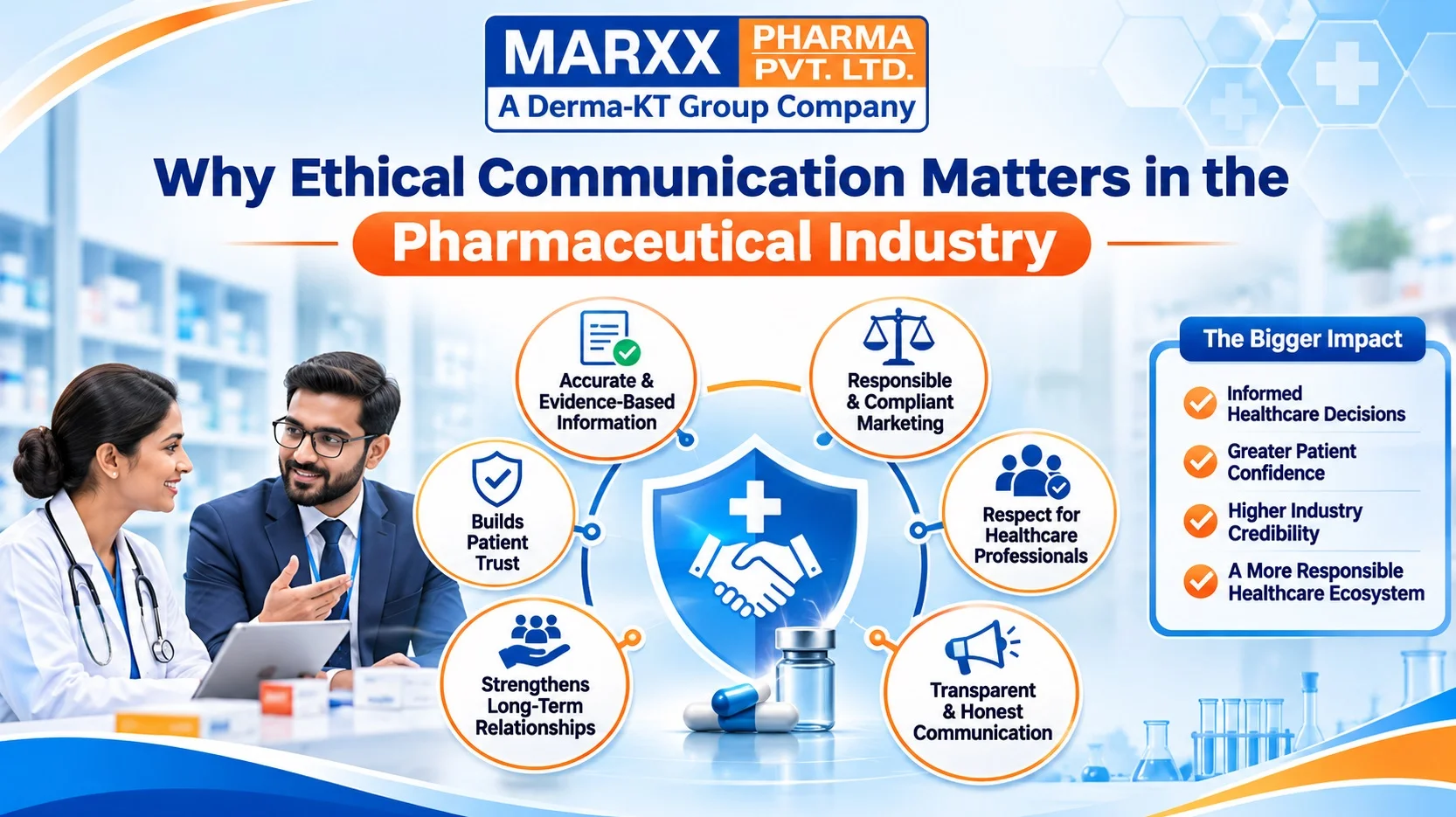
Why Ethical Communication Matters in the Pharmaceutical Industry
In healthcare, communication is about much more than sharing information. It influences decisions, shapes expectations and plays an important role in building trust.
The pharmaceutical industry carries a responsibility that extends beyond product development and distribution. Its communication can influence healthcare professionals, patients, distributors, business partners and the wider healthcare ecosystem.
This makes ethical communication an essential part of responsible pharmaceutical business practices.
Ethical communication in the pharmaceutical industry means sharing information that is accurate, transparent, balanced, evidence-based and responsible.
Whether a company is communicating product information, promoting a medicine or building professional relationships, honesty and clarity should remain central to every interaction.
What Is Ethical Communication in the Pharmaceutical Industry?
Ethical communication refers to the responsible exchange of information without misleading claims, hidden intentions or exaggerated promises.
In the pharmaceutical sector, it includes how companies communicate about medicines, product benefits, safety information, scientific evidence, marketing activities and professional relationships.
Ethical pharmaceutical communication involves:
- Providing accurate and verifiable product information.
- Avoiding misleading or exaggerated promotional claims.
- Communicating relevant safety information responsibly.
- Respecting healthcare professionals' independent clinical judgment.
- Maintaining transparency in business and marketing activities.
- Following applicable laws, regulations and industry codes.
- Correcting inaccurate information when identified.
The objective is simple: ensure that communication supports informed decisions rather than influencing them through incomplete or misleading information.
Why Does Ethical Communication Matter in Pharma?
The importance of ethical communication goes beyond brand reputation. It supports responsible healthcare practices and stronger relationships throughout the pharmaceutical ecosystem.
1. Builds Trust Among Healthcare Professionals
Healthcare professionals depend on reliable scientific and product information when evaluating treatment options.
Pharmaceutical companies therefore need to communicate product details clearly and responsibly.
Information should be supported by appropriate evidence and presented without exaggeration. Transparent communication allows healthcare professionals to assess information independently and make decisions based on their professional judgment.
Trust develops when communication remains consistent, factual and respectful.
2. Supports Patient Awareness and Informed Decisions
Patients often encounter pharmaceutical information through product packaging, educational material, websites and healthcare professionals.
Unclear or exaggerated claims can create unrealistic expectations and misunderstandings.
Responsible communication helps patients understand relevant product information, including intended use, directions, precautions and the importance of professional medical advice.
A pharmaceutical company should never allow promotional language to replace accurate healthcare information.
3. Prevents Misleading Product Promotion
Product promotion is an important part of the pharmaceutical business. However, promotional activities must remain within the boundaries of approved product information and applicable requirements.
Companies should avoid:
- Unsupported therapeutic claims.
- Exaggerated product benefits.
- Unsubstantiated comparisons with competing products.
- Statements that create unrealistic expectations.
- Omitting important qualifications or safety information.
Responsible promotion protects the credibility of both the company and the information being communicated.
4. Strengthens Business Relationships
Pharmaceutical companies work with a wide network of stakeholders, including distributors, stockists, healthcare professionals, suppliers and institutional partners.
These relationships depend on clear expectations and dependable information.
Transparent communication about product availability, documentation, business commitments, quality processes and operational requirements helps reduce misunderstandings.
Over time, consistent communication becomes an important foundation for professional relationships.
5. Protects Brand Reputation
A pharmaceutical company's reputation is built through its actions as well as its words.
Inaccurate claims, unclear product information or irresponsible marketing can weaken confidence among stakeholders.
On the other hand, companies that communicate responsibly demonstrate respect for their customers, professional partners and the wider healthcare system.
Ethical communication is therefore not simply a marketing practice. It is an important part of long-term brand credibility.
Ethical Pharmaceutical Marketing: More Than Promotion
Ethical pharmaceutical marketing focuses on communicating product information responsibly while respecting the requirements of healthcare professionals and patients.
In India, the Department of Pharmaceuticals introduced the Uniform Code for Pharmaceutical Marketing Practices (UCPMP) 2024 to establish ethical standards for pharmaceutical marketing and interactions with healthcare professionals.
The code addresses areas such as:
- Accuracy and balance in medicine-related information.
- Evidence supporting product claims.
- Responsible promotional materials.
- Ethical interactions with healthcare professionals.
- Restrictions and requirements concerning gifts, hospitality and sponsorships.
- Complaint handling and compliance mechanisms.
The code has also undergone subsequent amendments, making it important for pharmaceutical companies to refer to the latest applicable provisions rather than relying on outdated guidance.
For pharmaceutical businesses, ethical marketing should be treated as an ongoing responsibility, not just a compliance exercise.
The Role of Transparency in Pharmaceutical Communication
Transparency makes communication easier to understand and evaluate.
When companies share clear information about their products, processes and business practices, stakeholders are better positioned to make informed decisions.
A transparent communication approach should include:
Clear Product Information: Product descriptions, approved indications and relevant usage information should be presented accurately.
Evidence-Based Claims: Scientific and product-related statements should have appropriate supporting evidence.
Responsible Digital Content: Websites, social media posts and digital advertisements should avoid misleading health claims.
Accessible Information: Important details should be presented in language that the intended audience can understand.
Consistent Messaging: Information shared across sales teams, marketing channels and business partners should remain accurate and consistent.
Transparency is particularly important in a digital environment, where pharmaceutical information can reach large audiences within a short period.
Ethical Communication in the Digital Era
Digital platforms have transformed how pharmaceutical companies communicate with their audiences.
Company websites, online product catalogues, educational blogs, email campaigns and social media platforms provide opportunities to share information more efficiently.
However, digital communication also creates new responsibilities.
A claim published online can be shared, quoted or misunderstood beyond its original context. For this reason, pharmaceutical companies should establish clear review processes before publishing digital content.
Important practices include:
- Reviewing medical and product-related claims before publication.
- Using accurate and updated product information.
- Avoiding unverified testimonials and exaggerated promises.
- Clearly distinguishing educational information from product promotion.
- Protecting confidential business and personal information.
- Correcting outdated or inaccurate content.
- Ensuring that digital campaigns follow applicable promotional requirements.
Search visibility should never come at the cost of accuracy. SEO, GEO, AEO and AI-focused content strategies should help people discover reliable information, not amplify unsupported claims.
How Pharmaceutical Companies Can Build an Ethical Communication Culture
Ethical communication becomes more effective when it is supported by internal policies and everyday business practices.
Pharmaceutical companies can strengthen their communication culture through several practical steps.
1. Establish Clear Communication Guidelines
Create internal standards for product descriptions, promotional content, sales communication and digital publishing.
Employees should understand what information can be shared and what requires additional review.
2. Train Employees and Sales Teams
Medical representatives, marketing professionals and business development teams should receive appropriate training on ethical communication and applicable marketing requirements.
Regular training helps employees recognise misleading claims and communicate responsibly.
3. Introduce Content Review Processes
Product-related communication should be reviewed by appropriate regulatory, medical, quality or compliance personnel before publication or distribution.
This is particularly important for claims involving product safety, efficacy, indications and scientific evidence.
4. Maintain Accurate Documentation
Companies should maintain relevant product information, supporting evidence, approvals and marketing records.
Proper documentation supports transparency and helps organisations respond to questions or compliance reviews.
5. Encourage Accountability
Employees should have clear channels for raising concerns about misleading communication or potentially non-compliant promotional activities.
A culture of accountability encourages responsible behaviour across departments.
The Connection Between Ethical Communication and Quality Management
Quality management and ethical communication are closely connected.
Quality processes help pharmaceutical companies maintain consistency in manufacturing, documentation and operational activities. Ethical communication helps ensure that information about these activities is represented accurately.
For example, a company should not make quality certifications, manufacturing standards or product performance claims without appropriate supporting documentation.
Similarly, product information should reflect the relevant approved formulation and available evidence.
When quality management and responsible communication work together, they help strengthen organisational accountability and stakeholder confidence.
Marxx Pharma Pvt. Ltd.: The Importance of Responsible Communication in Healthcare
Marxx Pharma Pvt. Ltd. is an Indian pharmaceutical and healthcare company based in Hisar, Haryana.
The company's journey dates back to 2010, and Marxx Pharma Pvt. Ltd. was incorporated on 17 December 2022.
Its official website presents a portfolio of more than 400 products across categories that include allopathic pharmaceuticals, Ayurvedic products, cosmetics and nutraceuticals. The company also identifies itself as ISO 9001:2015 certified.
For a pharmaceutical organisation operating across diverse product categories, clear and responsible communication is an important part of engaging with healthcare professionals, business partners and consumers.
Product information should be communicated accurately, promotional statements should be appropriately supported, and stakeholders should be able to access relevant information.
As the healthcare industry continues to evolve, responsible communication remains an important principle for building professional relationships and supporting informed choices.
Visit the official website:
Frequently Asked Questions (FAQs)
1. What is ethical communication in the pharmaceutical industry?
Ethical communication means sharing accurate, balanced, transparent and evidence-based information about pharmaceutical products, services and business activities without misleading the audience.
2. Why is ethical communication important for pharmaceutical companies?
It helps build trust, supports informed healthcare decisions, reduces the risk of misleading promotion and strengthens relationships with healthcare professionals, patients and business partners.
3. What is ethical pharmaceutical marketing?
Ethical pharmaceutical marketing involves promoting medicines responsibly using accurate and substantiated information while following applicable laws, regulations and industry codes.
4. What is UCPMP 2024 in India?
The Uniform Code for Pharmaceutical Marketing Practices (UCPMP) 2024 is an Indian framework established by the Department of Pharmaceuticals to promote ethical pharmaceutical marketing and responsible interactions between pharmaceutical companies and healthcare professionals.
5. How does transparency improve patient trust?
Transparent communication helps patients access understandable and relevant information. It can reduce confusion and support discussions with qualified healthcare professionals.
6. How can pharmaceutical companies ensure responsible digital communication?
They can review product claims before publication, use reliable supporting information, update outdated content, avoid exaggerated promises and follow applicable promotional requirements.
7. What role do employees play in ethical pharmaceutical communication?
Employees represent the organisation in daily interactions. Appropriate training, clear guidelines and accountability help them communicate product and business information responsibly.
8. How does ethical communication support a pharmaceutical company's reputation?
Consistent and honest communication demonstrates accountability. Over time, this can strengthen professional relationships and contribute to long-term business credibility.
Building Trust Through Every Interaction
The pharmaceutical industry operates on a foundation of knowledge, responsibility and public confidence. Every product description, marketing campaign, professional interaction and digital communication contributes to how a company is understood.
Ethical communication makes those interactions more meaningful by placing accuracy and transparency ahead of exaggerated promises.
For pharmaceutical companies, the goal should not be limited to communicating more. It should be about communicating better.
When information is clear, evidence-based and responsibly presented, it supports stronger relationships and a more trustworthy healthcare ecosystem.